Sessions & Tracks
Track 01: Advanced Organic & Inorganic Chemistry
Organic chemistry is a chemistry sub discipline involving the scientific study of the structure, properties, and reactions of organic compounds and organic materials, i.e., matter in its various forms that contain carbon atoms. Study of structure includes many physical and chemical methods to determine the chemical composition and the chemical constitution of organic compounds and materials.
Related Associations: The Academy of Sciences for the Developing World (TWAS), Bio Chemical Society, British Crystallographic Association, Canadian Society for Chemistry, Chemical Society of Japan, Danish Chemical Society, and Federation of African Societies of Chemistry (FASC), Israel Analytical Chemistry Society, New Zealand Institute of Chemistry.
Track 02: Analytical Chemistry
Analytical techniques spans nearly all areas of chemistry but involves the development of tools and methods to measure physical properties of substances and apply those techniques to the identification of their presence (qualitative analysis) and quantify the amount present (quantitative analysis) of species in a wide variety of settings, analytical chromatography will be used in various fields for separation and analytical biochemistry is used to detect various samples.
Associated Societies: American Chemical Society, American Institute of Chemists (AIC), Association of Greek Chemists, Bio Chemical Society, Chemical Institute of Canada (CIC), Chinese Chemical Society (CCS), Danish Chemical Society, Federation of European Biochemical Societies, Japan Association for International Chemical Information, Royal Society of Chemistry (RSC), World Association of Theoretical and Computational Chemists
Track 03: Green and Sustainable Chemistry
Green chemistry, also called sustainable chemistry, is an area of chemistry and chemical engineering focused on the designing of products and processes that minimize the use and generation of hazardous substances. Environmental chemistry focuses on the effects of polluting chemicals on nature whereas green chemistry focuses on the environmental impact of chemistry, including technological approaches to preventing pollution and reducing consumption of non-renewable resources.
Related Associations: The Academy of Sciences for the Developing World (TWAS), Bio Chemical Society, British Crystallographic Association, Canadian Society for Chemistry, Chemical Society of Japan, Danish Chemical Society, Federation of African Societies of Chemistry (FASC), Israel Analytical Chemistry Society, New Zealand Institute of Chemistry.
Track 04: Physical Chemistry
Physical Chemistry is the study of macroscopic, atomic, subatomic, and particulate phenomena in chemical systems in terms of the principles, practices, and concepts of physics such as motion, energy, force, time, thermodynamics, quantum chemistry, statistical mechanics, analytical dynamics and chemical equilibrium. , in contrast to chemical physics, is predominantly (but not always) a macroscopic or supra-molecular science, as most of the principles on which it was founded relate to the bulk rather than the molecular/atomic structure alone (for example, chemical equilibrium and colloids).
Associated Societies: American Chemical Society, American Institute of Chemists (AIC), Association of Greek Chemists, Bio Chemical Society, Chemical Institute of Canada (CIC), Chinese Chemical Society (CCS), Danish Chemical Society, Federation of European Biochemical Societies, Japan Association for International Chemical Information, Royal Society of Chemistry (RSC), World Association of Theoretical and Computational Chemists
Track 05: Theoretical Chemistry
Theoretical chemistry is the examination of the structural and dynamic properties of molecules and molecular materials using the tools of quantum chemistry, equilibrium and non-equilibrium statistical mechanics and dynamics. Theoretical chemistry seeks to provide theories and explanations for chemical observations whilst also posing questions to be answered by future experiments. Playing a key role in physical chemistry, it uses the laws of physics to predict molecular structure, dynamics, bonding, reactivity, physical properties and spectroscopic response.
Related Associations: The Academy of Sciences for the Developing World (TWAS), Bio Chemical Society, British Crystallographic Association, Canadian Society for Chemistry, Chemical Society of Japan, Danish Chemical Society, Israel Analytical Chemistry Society, New Zealand Institute of Chemistry.
Track 06: Polymer Chemistry
Polymer chemistry is a sub-discipline of chemistry that focuses on the chemical synthesis, structure, chemical and physical properties of polymers and macromolecules. The principles and methods used for polymer chemistry are common to chemistry sub-disciplines organic chemistry, analytical chemistry, and physical chemistry. Many materials have polymeric structures, from fully inorganic metals and ceramics to DNA and other biological molecules; however, polymer chemistry is typically referred to in the context of synthetic, organic compositions.
Associated Societies: American Chemical Society, American Institute of Chemists (AIC), Association of Greek Chemists, Bio Chemical Society, Chemical Institute of Canada (CIC), Chinese Chemical Society (CCS), Danish Chemical Society, Federation of European Biochemical Societies, Japan Association for International Chemical Information, Royal Society of Chemistry (RSC), World Association of Theoretical and Computational Chemists
Track 07: Pharmaceutical chemistry
Pharmaceutical chemistry is the study of drugs, and it involves drug development. This includes drug discovery, delivery, absorption, metabolism, and more. There are elements of biomedical analysis, pharmacology, pharmacokinetics, and pharmacodynamics. Pharmaceutical chemistry work is usually done in a lab setting. Pharmaceutical chemistry involves cures and remedies for disease, analytical techniques, pharmacology, metabolism, quality assurance, and drug chemistry.
Related Associations: The Academy of Sciences for the Developing World (TWAS), Bio Chemical Society, British Crystallographic Association, Canadian Society for Chemistry, Chemical Society of Japan, Danish Chemical Society, Federation of African Societies of Chemistry (FASC), Israel Analytical Chemistry Society, New Zealand Institute of Chemistry.
Track 08: Materials Chemistry
Materials chemistry involves the use of chemistry for the design and synthesis of materials with interesting or potentially useful physical characteristics, such as magnetic, optical, structural or catalytic properties. The interdisciplinary field of materials science, also commonly termed materials science and engineering involves the discovery and design of new materials, with an emphasis on solids.
Associated Societies: American Chemical Society, American Institute of Chemists (AIC), Association of Greek Chemists, Bio Chemical Society, Chemical Institute of Canada (CIC), Chinese Chemical Society (CCS), Danish Chemical Society, Federation of European Biochemical Societies, Japan Association for International Chemical Information, Royal Society of Chemistry (RSC), World Association of Theoretical and Computational Chemists
Track 09: Biochemistry
Biochemistry can be defined as the science concerned with the chemical basis of life. The cell is the structural unit of living organisms. Thus, biochemistry can also be described as the science concerned with the chemical constituents of living cells and with the reactions and processes, they undergo. By this definition, biochemistry encompasses large areas of cell biology, of molecular biology, and of molecular genetics.
Related Associations: The Academy of Sciences for the Developing World (TWAS), Bio Chemical Society, British Crystallographic Association, Canadian Society for Chemistry, Chemical Society of Japan, Danish Chemical Society, Federation of African Societies of Chemistry (FASC), Israel Analytical Chemistry Society, New Zealand Institute of Chemistry.
Track 10: Chemical Engineering
Chemical engineering is a branch of engineering that applies physical sciences (physics and chemistry), life sciences (microbiology and biochemistry), together with applied mathematics and economics to produce, transform, transport, and properly use chemicals, materials and energy. A chemical engineer designs large-scale processes that convert chemicals, raw materials, living cells, microorganisms and energy into useful forms and products. It is a process engineering which mainly comprises of the concepts of unit operation, unit process and chemical technology.
Associated Societies: American Chemical Society, American Institute of Chemists (AIC), Association of Greek Chemists, Bio Chemical Society, Chemical Institute of Canada (CIC), Chinese Chemical Society (CCS), Danish Chemical Society, Federation of European Biochemical Societies, Japan Association for International Chemical Information, Royal Society of Chemistry (RSC), World Association of Theoretical and Computational Chemists
Track 11: Chemistry in Clinical Research
Clinical chemistry (also known as chemical pathology, clinical biochemistry or medical biochemistry) is the area of chemistry that is generally concerned with analysis of bodily fluids for diagnostic and therapeutic purposes. In the many decades since, other techniques have been applied as science and technology has advanced, including the use and measurement of enzyme activities, spectrophotometry, electrophoresis, and immunoassay.
Related Associations: The Academy of Sciences for the Developing World (TWAS), Bio Chemical Society, British Crystallographic Association, Canadian Society for Chemistry, Chemical Society of Japan, Danish Chemical Society, Federation of African Societies of Chemistry (FASC), Israel Analytical Chemistry Society, New Zealand Institute of Chemistry.
Track 12: Computational Chemistry
Combinatorial chemistry comprises chemical synthetic methods that make it possible to prepare a large number (tens to thousands or even millions) of compounds in a single process. These compound libraries can be made as mixtures, sets of individual compounds or chemical structures generated by computer software. Synthesis of molecules in a combinatorial fashion can quickly lead to large numbers of molecules.
Associated Societies: American Chemical Society, American Institute of Chemists (AIC), Association of Greek Chemists, Bio Chemical Society, Chemical Institute of Canada (CIC), Chinese Chemical Society (CCS), Danish Chemical Society, Federation of European Biochemical Societies, Japan Association for International Chemical Information, Royal Society of Chemistry (RSC), World Association of Theoretical and Computational Chemists
Track 13: Electrochemistry
Electrochemistry is the branch of physical chemistry that studies the relationship between electricity, as a measurable and quantitative phenomenon, and identifiable chemical change, with either electricity considered an outcome of a chemical change or vice versa. These reactions involve electric charges moving between electrodes and an electrolyte (or ionic species in a solution). Thus, electrochemistry deals with the interaction between electrical energy and chemical change.
Related Associations: The Academy of Sciences for the Developing World (TWAS), Bio Chemical Society, British Crystallographic Association, Canadian Society for Chemistry, Chemical Society of Japan, Danish Chemical Society, Federation of African Societies of Chemistry (FASC), Israel Analytical Chemistry Society, New Zealand Institute of Chemistry.
Track 14: Natural Product Chemistry
Chemistry of natural product is a field of organic chemistry. A natural product is a chemical compound or substance produced by a living organism that is found in nature. The term natural product has been extended for commercial purposes to refer to cosmetics, dietary supplements and foods produced from natural sources without added artificial ingredients.
Associated Societies: American Chemical Society, American Institute of Chemists (AIC), Association of Greek Chemists, Bio Chemical Society, Chemical Institute of Canada (CIC), Chinese Chemical Society (CCS), Danish Chemical Society, Federation of European Biochemical Societies, Japan Association for International Chemical Information, Royal Society of Chemistry (RSC), World Association of Theoretical and Computational Chemists
Track 15: Applied Chemistry
Applied chemistry is the application of the principles and theories of chemistry to answer a specific question or solve a real-world problem, as opposed to pure chemistry, which are aims at enhancing knowledge within the field. Applied Chemistry is the scientific field of understanding basic chemical properties of materials and for producing new materials with well-controlled functions.
Related Associations: The Academy of Sciences for the Developing World (TWAS), Bio Chemical Society, British Crystallographic Association, Canadian Society for Chemistry, Chemical Society of Japan, Danish Chemical Society, Federation of African Societies of Chemistry (FASC), Israel Analytical Chemistry Society, New Zealand Institute of Chemistry.
Market Analysis
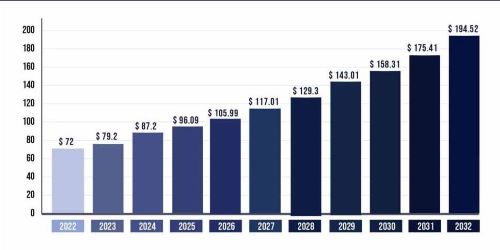
The chemicals market is a diverse sector comprised of many different chemical products used across industries such as construction, oil and gas, textiles, pharmaceuticals, energy, personal care, and food. It includes additives, single chemical formulations, and high-value specialty chemicals.
The global chemicals industry is expected to see healthy growth in the coming years, driven in part by increasing demand from areas such as the agrochemical industry, recycled plastics, and construction. Agrochemicals are in high demand as they are used in the production of a wide variety of crops as well as for decorative plants and other applications. Forecasts suggest continued growth, fueled by technological advancements and innovations in chemical manufacturing processes.
Chemicals Market Insights and Dynamics:
One key trend in the chemicals market is advancements in technology, such as nanotechnology and biotechnology, to develop new chemical products and manufacturing processes. There is also a growing focus on sustainability and environmental regulations that is driving the development of eco-friendly chemicals and processes.
Increasing demand from various industries for performance-driven chemicals such as additives, fertilizers, pesticides, and active pharmaceutical ingredients is helping to drive the industry. Technological advancements and innovations in chemical synthesis and process optimization also contribute to market growth.
Challenges facing the chemicals market include volatility in raw material prices, raw material shortages, and shipping delays impacting the availability of products. Environmental regulations and sustainability concerns also pose challenges, driving the need for eco-friendly alternatives and process optimizations.
Overall, the chemicals market presents opportunities for innovation and expansion, driven by increasing demand from various industries and advancements in technology. Success in the market requires a focus on sustainability, compliance with environmental regulations, and adaptation to evolving consumer demands and industry trends.
Chemicals Market Geographic Landscape:
The market in APAC is expected to grow significantly during the forecast period, driven by countries such as China, Japan, India, Vietnam, South Korea, Malaysia, and Australia. China, Japan, South Korea, and India are the major markets in APAC, owing to rapid industrialization and the increasing demand for agrochemicals, plastic additives, food additives, and adhesives and sealants in the region.
Chemicals Competitive Landscape:
Technavio's chemicals industry reports monitor the leading players in the global market along with their current and forecasted market share. Our analysis covers regional and global companies. Some of the top companies covered in our chemicals market reports include:
-
Ashland Inc.
-
BASF SE
-
Beardow and Adams Adhesives Ltd.
-
Clariant International Ltd.
-
Danimer Scientific Inc.
-
Dow Chemical Co.
-
Dymax Corp.
-
Evonik Industries AG
-
Exxon Mobil Corp.
-
H.B. Fuller Co.
-
Henkel AG and Co. KGaA
-
Huntsman International LLC
-
Lanxess AG
-
Nouryon Chemicals Holding BV